Grower-producer (RM): what makes a true grower champagne
The essentials
A grower-producer is a winegrower who makes their champagne exclusively from the grapes of their own vines. They grow, harvest, vinify and bottle it themselves, at the estate. That is what makes a true grower champagne.
A grower-producer is a winegrower who makes their champagne exclusively from the grapes of their own vines. They grow, harvest, vinify and bottle it themselves, at the estate. That is what makes a true grower champagne. Faced with shelves full of bottles, one clue confirms it: the RM mention, which must appear on the label.
By Mathilde Charpentier4 min read
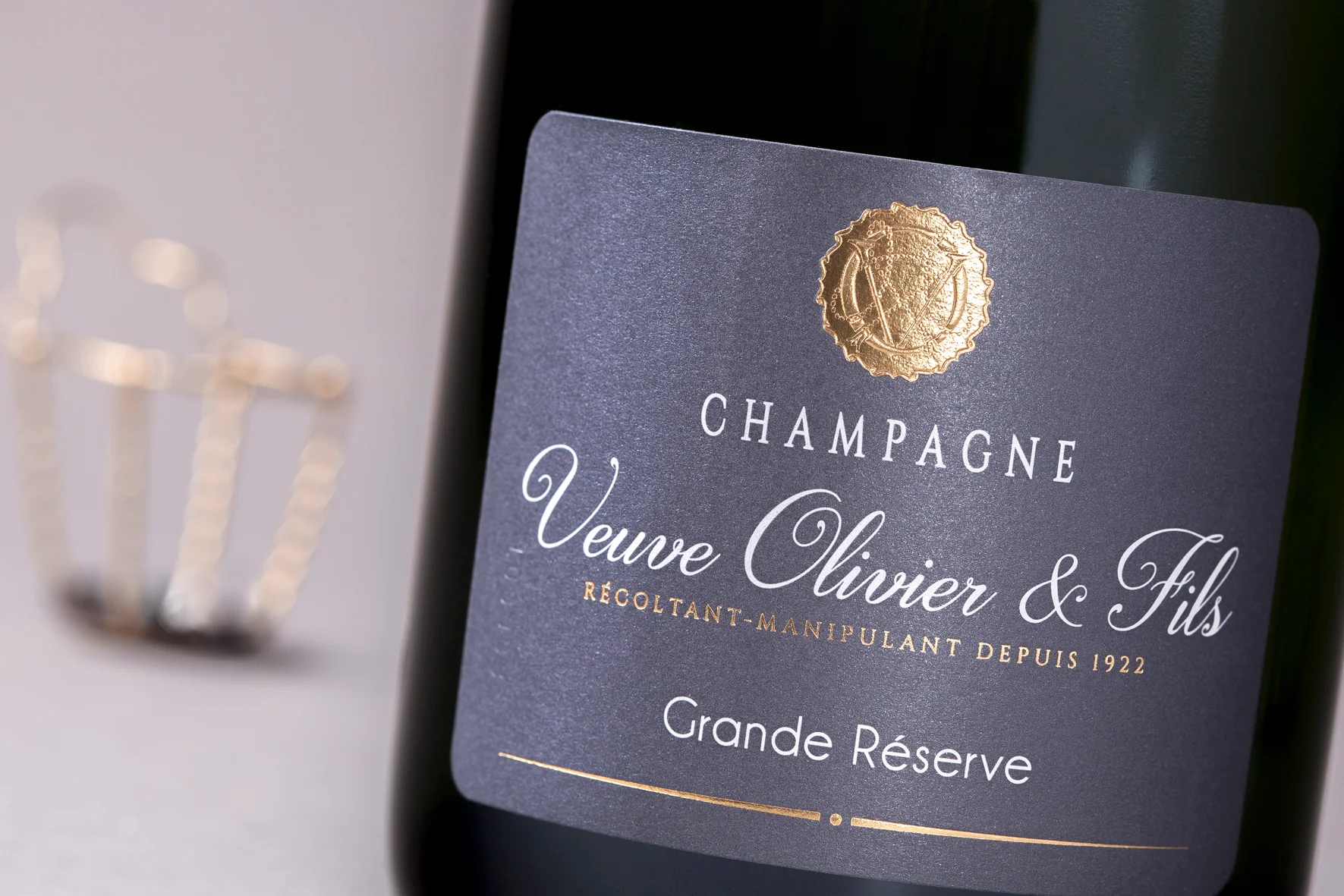
At Champagne Veuve Olivier & Fils, a family house founded in 1922, our women winegrowers carry on this spirit of independence. Here is how to recognise this status, tell it apart from the others and understand what it changes in your glass.
In brief
A grower-producer (RM) makes their champagne using only their own grapes (100%), from vine to bottle.
The RM mention is compulsory and appears on the label or back label, in front of the registration number.
It sets them apart from the négociant (NM), who buys in grapes, and from the cooperative (CM).
How do you identify an RM grower-producer champagne?
Being a grower-producer is a genuine way of life. We make our wines exclusively from our own grapes. They are harvested from our Trélou-sur-Marne terroir and vinified in our cellars.
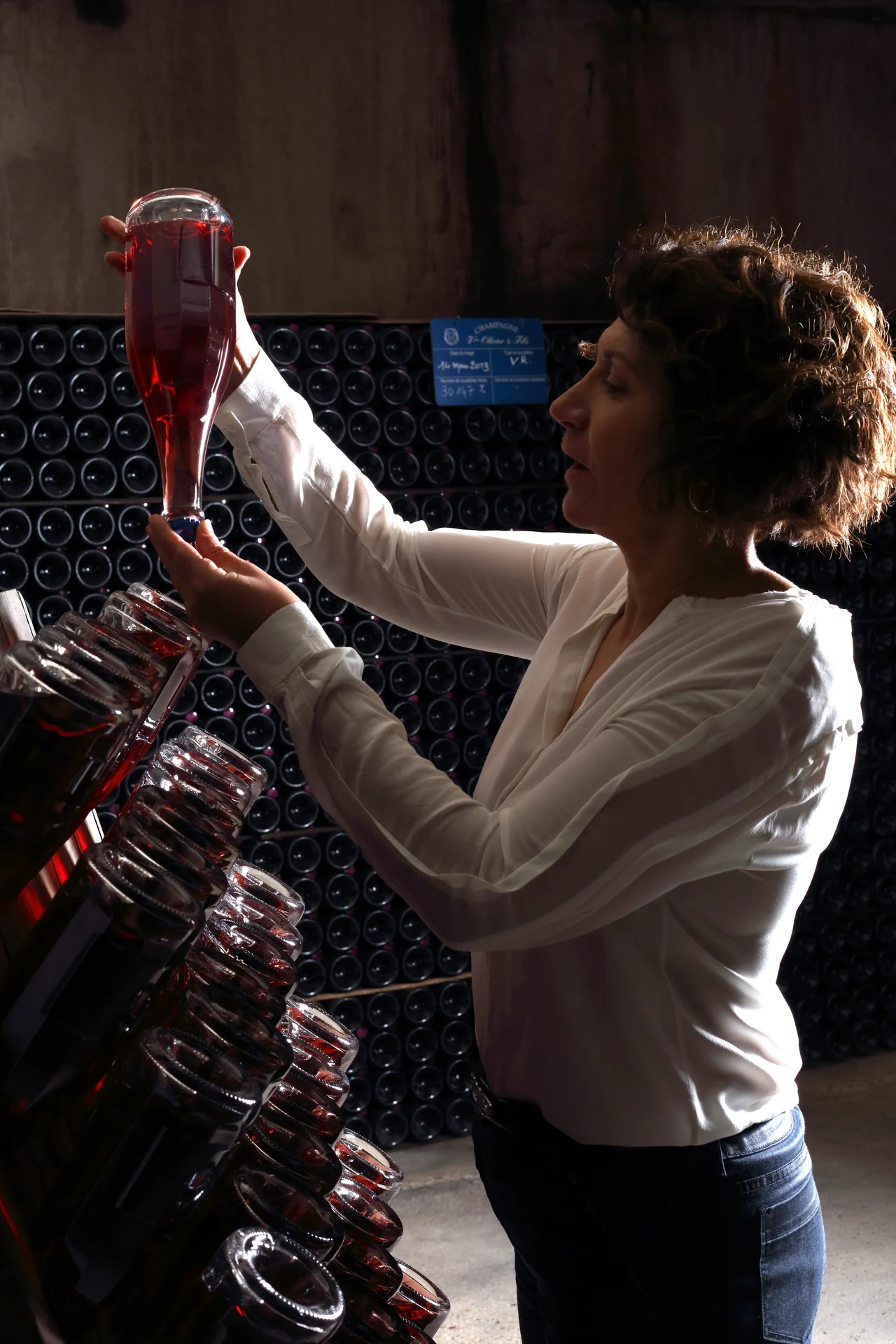
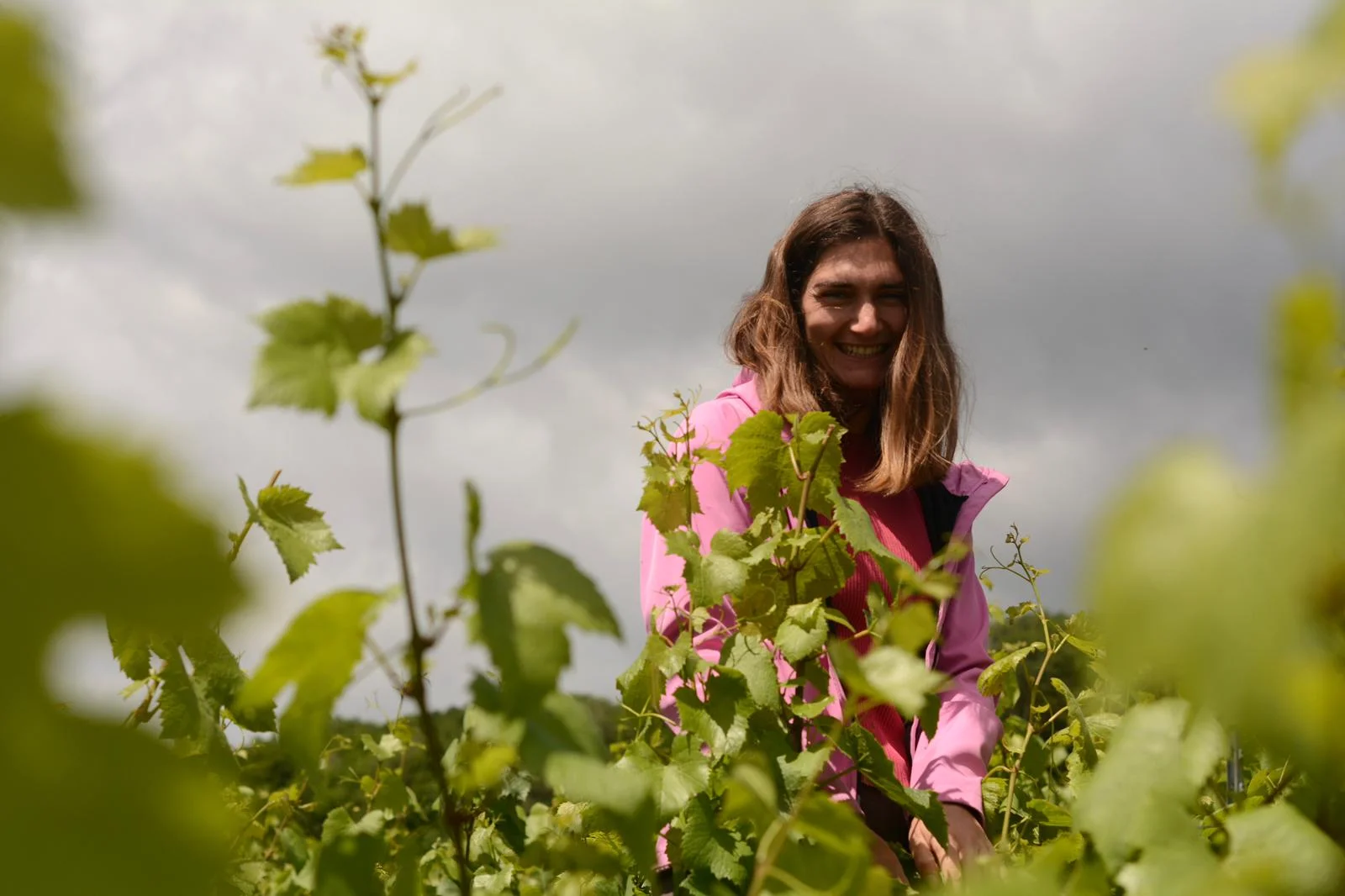
From pruning the vines to pressing on our traditional press, we oversee every step. Our 18 hectares stretch across south-facing slopes. Pinot Meunier, the emblematic grape of the Vallée de la Marne (Marne Valley), covers 55% of the vineyard. Pinot Noir (27%) and Chardonnay (18%) complete the plantings. Our estate is also certified Viticulture Durable en Champagne (Sustainable Viticulture in Champagne), with natural grass cover between the vines. This meticulous work is what defines a true artisan product: a wine for sharing, shaped by time and nature.
You may also come across the “Champagne de Vignerons” logo on some bottles. It is a collective brand run by the Syndicat Général des Vignerons de la Champagne (the Champagne winegrowers' union). It brings together Champagne growers who make and sell their own champagne. Our house is listed in its directory. Would you like to meet the women and men behind our bottles? Dive into the history of our family house.
How does a grower-producer differ from other producer types?
During a tour of our cellars and tasting at the estate, we love to share our passion simply. To choose the right bottle, you only need to read the label. Two compulsory letters appear at the bottom, in front of the producer's professional registration number. Here is what they mean:
Label code
Who grows the grapes?
Who makes the champagne?
Under whose brand?
RM grower-producer
The grower, from their own vines
The grower, at the estate
Their own
RC cooperative grower
The grower
Their cooperative
The grower's
SR growers' company
Partner growers, often from the same family
The company
The company's
NM négociant
The house and the many growers it buys grapes from
The house
The house's
CM cooperative
Its member growers
The cooperative
The cooperative's
ND négociant-distributor
A third party
A third party
The distributor's, which buys finished bottles
MA buyer's own brand
A third party
A third party
A buyer's (retailer, restaurant)
The RM mention remains the clearest guarantee of a wine made at the estate. A négociant house often aims for a consistent taste from one year to the next. A grower-producer, on the other hand, gives freer rein to its terroir and to the character of each year.
Handing down the grower-producer's craft since 1922
Our story begins in 1922, on the right bank of the Marne. Edmond Olivier was then farming around one hectare of vines. Struggling to sell his grapes, he decided to vinify them himself, becoming one of the first grower-producers in the village. His first bottles bore the name “Terroir des Buttes”.
Very soon, the women of the family came to play a decisive role. Lucie, his wife, and Liliane, his daughter, ran a corset-making workshop. The business thrived and its income funded the expansion of the vineyard. In 1955, Liliane and her son Pierre founded the Veuve Olivier & Fils brand. The name alone tells our story: a woman and her son, united around the family champagne.
In the 1960s, Pierre and Michelle Olivier expanded the vineyard and the sales of our bottles. Around 2000, their daughter Sandrine Charpentier-Olivier took over the running of the estate. She opened the house up to international markets and gave it its signature: “Une Femme, une Culture, un Vin” (One Woman, One Culture, One Wine).
Today Mathilde, the fifth generation, has joined the estate. Two generations of women winegrowers are thus carrying forward a grower-producer house that has been going for more than a century. Our grower champagne is also, and above all, a champagne made by women growers.
Video transcript (translated from French)
It’s the joys, the sorrows and the life of four generations of winegrowers. You have all of that in a bottle of champagne.
When my grandmother took over the estate, she created her own brand with her husband, Champagne Maurice Olivier. Sadly, her husband died very young and she found herself running the estate at the age of 40. She named her champagne Champagne Veuve Olivier & Fils.
I grew up in the world of champagne. As a little girl I spent a lot of time at my grandmother’s. I played among the barrels and the old press, and I set all my toys down in this world of vines and wine. Later I worked in France and abroad, but always in the world of champagne. Very quickly I realised that the call of family was stronger, and above all the call of the land and of the village of Trélou.
Being a winegrower means adapting and readjusting your work every day, and regularly questioning yourself, because we work with nature. There are the vagaries of the weather. It is very much a job of observing the vines and working in the cellar. The aim is to offer, from one cuvée to the next, a strong imprint of the terroir.
My greatest pleasure, in fact, is to start from a single vine and go all the way to the finished product, to manage every stage of production and to give our customers emotion. The secret is to give the wine time to express itself and develop its aromas. And time is a precious thing that we tend to forget in today’s society.
When I see the bottles on the labelling line, then shipped to the four corners of the world, I always hope our customers take great pleasure in tasting them, and I invite them to come and discover more.
In a winegrower's words: Sandrine Charpentier-Olivier, winegrower and head of Champagne Veuve Olivier & Fils:
“Our real strength lies in human relationships as much as in the wine. For five generations, our signature ‘Une Femme, une Culture, un Vin’ has summed up our approach. We vinify our 21 plots separately to let nature express itself before the final blend. That is how our cuvées are born.”
Meet the women winegrowers of our champagne house
Choosing a grower champagne means choosing a story, a terroir and the faces behind it. Here, they are the faces of women who, from Lucie and Liliane to Sandrine and Mathilde, keep a precious savoir-faire alive.
A grower-producer is a winegrower who makes their champagne exclusively from the grapes of their own vines. They grow, harvest, vinify and bottle it themselves, at the estate.
What is the difference between a grape grower, a grower-producer and a négociant?
A grape grower tends the vines and sells the grapes. A grower-producer makes champagne from their own harvest. A négociant buys grapes from other growers to create its cuvées.
Where can I find the RM mention on a bottle of champagne?
On our bottles, it appears on the back label, in small print. Look for two letters followed by a registration number: “RM” indicates a grower-producer.
Share this article
L'abus d'alcool est dangereux pour la santé, à consommer avec modération. Alcohol abuse is dangerous for your health. Consume in moderation.
La vente de boissons alcooliques aux mineurs de moins de 18 ans est interdite. La preuve de majorité de l’acheteur est exigée lors de la vente en ligne.

 By Mathilde Charpentier4 min read